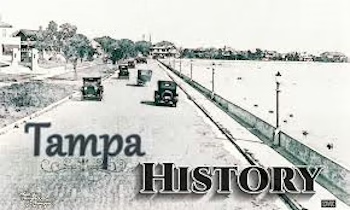
Tampa, Florida, is a city shaped by water, migration, commerce, and cultural merging. Situated along the Tampa Bay estuary in Hillsborough County, the city has evolved from an Indigenous homeland to a frontier military outpost, then to a global hub of industry, tourism, and modern innovation. Today, Tampa’s rich past is visible in its historic districts, lively waterfront spaces, and dynamic neighborhoods stretching from Ybor City to Seminole Heights, Hyde Park Village, West Tampa, and the transforming skyline of Downtown Tampa.
Indigenous Foundations and Early Colonial Tensions
Long before Spanish explorers arrived, the Tocobaga tribe lived along the Hillsborough River, fishing the bay’s abundant waters and sustaining their communities through seasonal gathering and small-scale agriculture. European contact in the 16th century brought conflict, disease, and displacement. Later, the Seminole people established settlements inland and along the coasts, navigating pressure from both American settlers and U.S. military forces.
In the early 1800s, conflict escalated as the United States pushed into Florida. To secure the region, the U.S. Army constructed Fort Brooke near the mouth of the river — the strategic anchor of what would one day become Tampa. The military presence drew civilians, traders, and ranchers, laying the earliest foundations for a permanent town.
Tampa in the 19th Century: Railroads, War, and New Possibilities
The breakthrough moment came with the railroad expansion led by Henry B. Plant, whose rail line connected Tampa to national markets. Plant also developed luxury Tampa hotels, including the striking Moorish revival building now home to the University of Tampa, a city landmark on the riverbank.
Tampa’s strategic location made it a staging ground during the Spanish–American War. U.S. troops, journalists, and international observers passed through the city, placing Tampa briefly at the center of U.S. military activity and accelerating local growth. This period also established a Tampa military history presence later reinforced by MacDill Air Force Base, still a key employer and cultural influence in the region.
Ybor City and the Cigar Capital of the World
The most transformative chapter began in the 1880s when Cuban cigar manufacturer Vicente Martínez-Ybor relocated his factories to Tampa. The move created Ybor City, a thriving Latin Quarter where Cuban, Spanish, Italian, Jewish, Afro-Cuban, and German immigrants built an extraordinary multiethnic community.
Tampa soon became known as the cigar capital, with cigar factories employing thousands of skilled cigar rollers. Workers gathered in clubs, cafés, and mutual aid societies, while the lector tradition — professional readers who entertained workers — made factories hubs of global consciousness, labor movements, and cultural creativity.
This era gave Tampa:
- The Columbia Restaurant, now the oldest restaurant in Florida
- Deep-rooted Cuban community traditions
- The origins of the Cuban sandwich, still debated between Tampa and Miami
Ybor City nightlife, community festivals, and preserved brick streets remain symbols of Tampa’s immigrant-built identity.
Growth, Shipping, and the Port Economy
As Tampa entered the 20th century, the Port Tampa and Tampa shipping industry expanded rapidly. The development of shipping channels allowed for large-scale transport of citrus, lumber, and especially the phosphate industry — a mineral export that remains vital to Florida’s economy.
Dockworkers, Tampa port workers, and maritime trades sustained the region, while rail lines and the waterway fueled industrial expansion. Tampa maritime heritage left lasting marks on the waterfront.
Boomtown, Bust, and Cultural Reinvention
During the Gilded Age Tampa and into the early 1900s, neighborhoods like West Tampa and Palma Ceia developed around thriving mills, shops, and small businesses. The popularity of Sulphur Springs and Tampa natural springs encouraged tourism, while the expansion of Tampa streetcar service — now remembered through the restored TECO Line Streetcar system — connected communities.
In the Prohibition era, Tampa was known for rum-running, speakeasies, and even political intrigue. Tampa jazz history emerged in smoky clubs, blending Afro-Cuban rhythms with American blues. Cultural expression thrived even when economic conditions tightened.
Mid-Century Suburban Expansion and Infrastructure
After World War II, Tampa expanded outward. New neighborhoods such as Carrollwood, New Tampa, and Tampa suburbs quickly developed as returning veterans and new residents sought family homes.
Major transportation improvements included:
- The Howard Frankland Bridge connecting Tampa to St. Petersburg
- The Sunshine Skyway Bridge linking the region to communities south of the bay
These bridges reshaped commuting and cultural exchange across Tampa Bay bridges and highways.
The construction of Tampa International Airport further propelled tourism, business travel, and global connectivity.
Sports, Entertainment, and the Rise of a Destination City
Tampa’s identity grew beyond industry and shipping through sports and culture. The city became home to:
- The Tampa Bay Buccaneers at Raymond James Stadium
- The Tampa Bay Lightning at Amalie Arena
- The Tampa Bay Rays (in neighboring St. Petersburg but regionally tied)
Festivals like the Gasparilla Pirate Festival became defining cultural events, merging myth, performance, and citywide celebration. Tampa cultural festivals now draw international visitors.
Historic theaters such as the Tampa Theatre and institutions like the Tampa Museum of Art and Tampa Bay History Center preserved heritage while promoting new cultural development.
Urban Redevelopment and the Modern Tampa Skyline
The late 20th and early 21st centuries brought a wave of urban redevelopment and waterfront development. Projects like the Tampa Riverwalk connected cultural and recreational destinations along the Hillsborough River, linking:
- Curtis Hixon Waterfront Park
- The Florida Aquarium
- Harbour Island
- Channelside
- Davis Islands
Meanwhile, the Westshore District and International Plaza emerged as centers for Tampa restaurants, Tampa nightlife, corporate offices, and retail.
Tampa Today: Growth, Innovation, and Cultural Renewal
Modern Tampa strikes a balance between preservation and ambitious expansion. Real estate in Tampa continues to grow, attracting new professionals, retirees, and Florida second home buyers. The city’s food scene, coffee culture, and craft breweries reflect a diverse range of tastes shaped by global influences.
Economic diversification fuels new industries:
- Tech in Tampa
- The Tampa startup scene
- Medical research and education partnerships
A focus on Tampa green spaces, waterfront parks, and community planning guides sustainable growth.
A City Rooted in Heritage, Growing Into the Future
From the ancestral lands of the Tocobaga and Seminole peoples to the cigar workers of Ybor City, from military encampments to bustling shipping terminals and vibrant cultural corridors, Tampa’s story is one of continual reinvention shaped by water, people, and shared history.
Today’s modern Tampa skyline reflects both its past and its potential — a city honoring its cultural foundations while embracing new possibilities in every direction.
Historic Sites You Can Visit Today
Ybor City Historic District
Ybor City stands as a testament to Tampa’s immigrant history, particularly its deep ties to the cigar industry. Founded in the 1880s by Spanish entrepreneur Vicente Martinez-Ybor, this vibrant neighborhood became a melting pot for Cuban, Spanish, Italian, and other immigrants seeking opportunities in cigar manufacturing.
Walking through Ybor City today, visitors can still experience the cobblestone streets, historic cigar factories, and colorful casitas that once housed cigar workers. The Ybor City Museum State Park offers a comprehensive look at the area’s history, from its industrial boom to its decline and subsequent revitalization.
Henry B. Plant Museum
Located on the grounds of the University of Tampa, the Henry B. Plant Museum occupies the former Tampa Bay Hotel, a magnificent structure built in 1891 by railroad magnate Henry B. Plant. The hotel was a luxury resort that attracted wealthy visitors during Florida’s Gilded Age.
Today, the museum preserves the opulence and grandeur of the Victorian era through its exhibits on hotel life, the railroad industry, and Tampa’s early tourism boom. Visitors can explore the ornate rooms, view historic artifacts, and gain insights into the economic and social history of Tampa in the late 19th century.
Tampa Bay History Center
For a broader perspective on Tampa’s history spanning millennia, the Tampa Bay History Center offers an expansive collection of exhibits and artifacts. Situated along the waterfront in downtown Tampa, the museum explores the region’s Native American heritage, Spanish colonization, and its transformation into a modern metropolis.
Highlights include interactive exhibits on maritime history, pioneer life, and the impact of industries like shipping and fishing on Tampa’s development. The museum’s commitment to preserving and presenting diverse aspects of Tampa’s past makes it a vital educational resource for residents and visitors alike.
Fort Brooke
Established in the early 19th century, Fort Brooke played a pivotal role in protecting Tampa Bay during periods of conflict and in facilitating the city’s growth as a port and trading hub. Originally constructed during the Second Seminole War, the fort’s strategic location near the Hillsborough River contributed to Tampa’s emergence as a center for commerce and military activity.
While the physical fort no longer stands, its historical significance is commemorated through markers and exhibits at the Tampa Convention Center and the nearby Cotanchobee Fort Brooke Park. These remnants serve as reminders of Tampa’s military heritage and its evolution from a frontier outpost to a bustling urban center.
Tampa Theatre
Opened in 1926, the Tampa Theatre is a beloved cultural landmark that embodies the glamorous era of movie palaces. Designed in a Mediterranean Revival style with elements of Byzantine, Spanish, and Italian architecture, the theater is renowned for its atmospheric interior, complete with twinkling stars on the ceiling and ornate detailing.
Beyond its architectural splendor, the Tampa Theatre has played a significant role in the city’s cultural life, hosting film screenings, live performances, and community events. Its preservation and ongoing operation as a nonprofit organization highlight the community’s commitment to celebrating Tampa’s artistic and architectural heritage.
Explore More of Tampa’s History & Culture
- The Gasparilla Festival of the Arts
- Inside Tampa: A Friendly Guide to City Government and Local Politics
- The History of Russian Influence in Tampa, Florida
- Ybor City: The Soul of Tampa’s Immigrant History, Culture, and Flavor
- The TECO Line Streetcar system
- German culture in Tampa
- Tampa history of upscale hotels
- Tampa, Florida: Where Culture, History, and Sunshine Meet
- Tampa’s Historic Sites
- History of Tampa