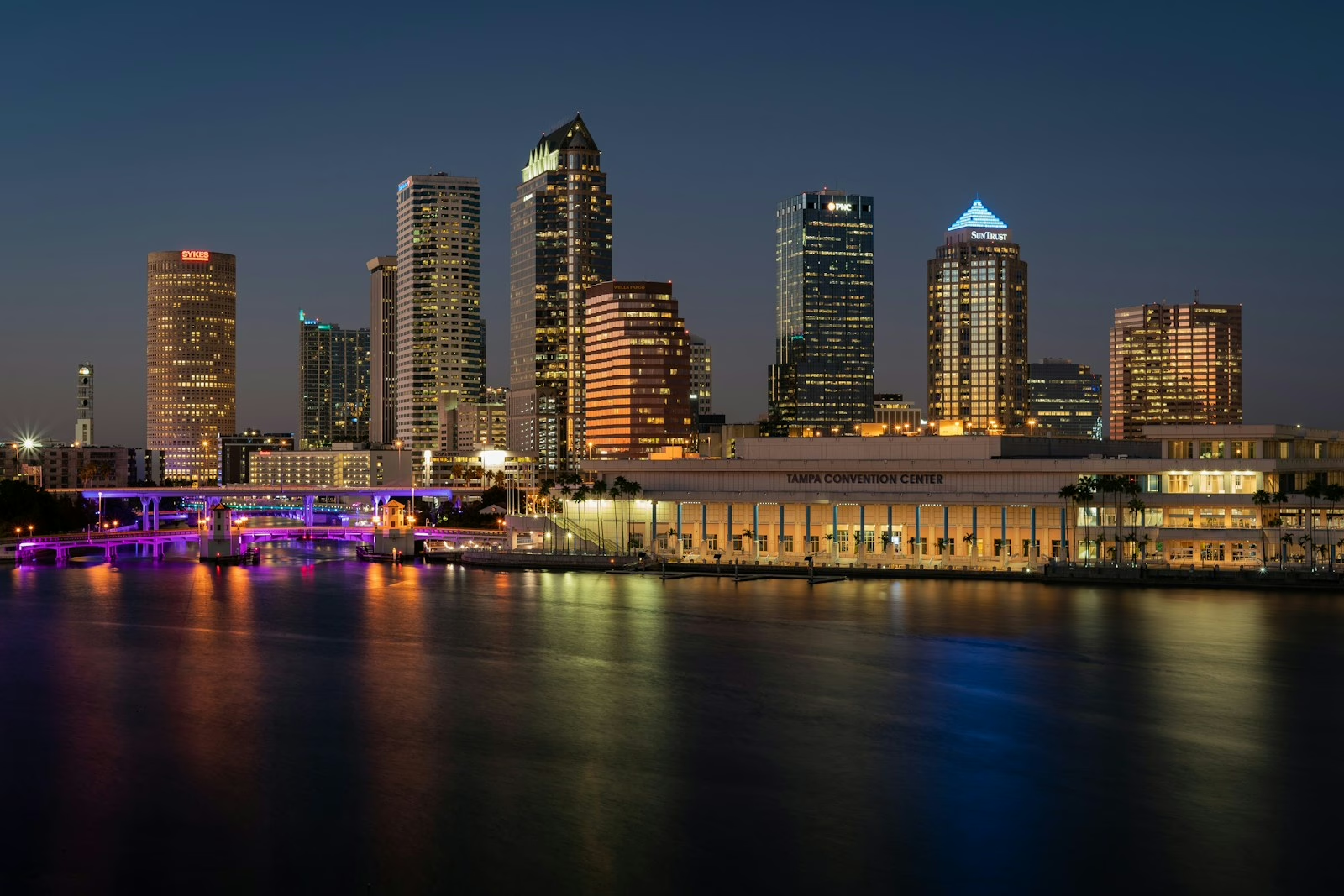
Moving to Tampa, Florida has become one of the most popular relocation decisions in the country, and it’s easy to see why. Sitting on the western shore of Tampa Bay along Florida’s Gulf Coast, the city pairs warm weather and waterfront living with a genuinely diversified job market, no state income tax, and a cost of living that — while rising — still undercuts coastal peers like Miami, New York, or Boston. Whether you’re relocating for a new job, retiring, or simply chasing more sunshine, this guide walks through what daily life in Tampa actually looks like: housing, neighborhoods, work, schools, weather, and the practical realities newcomers tend to learn the hard way.
Why People Keep Moving to Tampa

Tampa consistently ranks among the fastest-growing metro areas in the United States, and the Tampa–St. Petersburg–Clearwater region as a whole now tops 3.2 million residents. The pull is a combination of factors that compound on each other. Florida levies no personal state income tax, which meaningfully changes take-home pay for professionals and stretches fixed incomes for retirees. The regional economy has broadened well beyond tourism into healthcare, finance, defense, and a fast-growing tech sector. And the lifestyle — Gulf beaches within an hour, three major-league sports teams, a walkable downtown Riverwalk, and year-round outdoor recreation — closes the deal for a lot of people who come to visit and decide to stay.
Cost of Living in Tampa
Tampa’s cost of living sits roughly around the national average, with housing as the swing factor. The single biggest adjustment most newcomers face is home prices and rent, both of which climbed sharply during the pandemic relocation wave and have since leveled into a high but more stable range. A typical one-bedroom apartment in or near the urban core generally runs in the mid-$1,500s to low-$2,000s per month, while suburban and family-sized rentals vary widely by neighborhood and school zone.
Beyond housing, a few line items surprise people. Homeowners insurance in Florida is expensive and has gotten more so — budget carefully and get quotes before you commit to a home, especially in flood-prone or coastal zones. Electricity bills spike in summer thanks to near-constant air conditioning, and many newer communities carry HOA or CDD (Community Development District) fees on top of the mortgage. The flip side: no income tax, no state-level vehicle-mileage surprises, and grocery and dining costs that remain reasonable by big-city standards.
Tampa Housing and Real Estate
The local market offers everything from 1920s bungalows in historic districts to glassy downtown condos and sprawling master-planned suburbs. Waterfront and water-access homes command a premium, as do properties in top-rated school zones. If you’re buying, pay close attention to flood zone designations, elevation certificates, and the age of the roof — all three directly affect insurability and price. Investors continue to find Tampa attractive because steady in-migration supports long-term rental demand, but rising insurance and property taxes have tightened the math compared to a few years ago. For a deeper look at conditions, our guide to the Tampa Bay real estate market breaks down current trends.
Best Neighborhoods in Tampa
Where you land matters as much as the city itself. A quick orientation to the areas newcomers ask about most:
- South Tampa — Tree-lined streets, easy access to downtown and the airport, and a strong restaurant and bar scene along Bay-to-Bay and Howard Avenue (SoHo). Popular with young professionals and families; prices reflect the demand.
- Hyde Park — One of the most walkable parts of the city, anchored by Hyde Park Village’s boutiques and cafes, with historic homes and brick streets. Charming and central, with prices to match.
- Seminole Heights — The go-to for creatives and food lovers, known for craft breweries, independent restaurants, and revitalized 1920s bungalows. More affordable than South Tampa with a strong neighborhood identity.
- New Tampa — A suburban, family-focused area in the northeast with newer construction, golf courses, and good schools; a longer commute to downtown but more house for the money.
- Channel District & Downtown — Urban living near the Riverwalk, Water Street, Sparkman Wharf, and Amalie Arena. Best for those who want to walk to work, restaurants, and Lightning games.
For a more granular comparison, see our ultimate guide to the best neighborhoods in Tampa.
Jobs and the Tampa Economy
Tampa’s economy has diversified dramatically over the past two decades. Major employers and sectors include healthcare (Tampa General Hospital, AdventHealth, Moffitt Cancer Center), finance and banking, MacDill Air Force Base and the defense ecosystem around U.S. Central Command and Special Operations Command, tourism and hospitality, and a rapidly expanding technology and financial-services corridor downtown. The University of South Florida adds a research-and-innovation layer that feeds the regional talent pipeline. Salaries have risen with demand but still trail the largest coastal markets — something to weigh against the no-income-tax advantage when you compare offers.
Weather and Hurricane Season
Tampa has a humid subtropical climate: mild, pleasant winters that draw snowbirds and retirees, and hot, humid summers with near-daily afternoon thunderstorms from roughly June through September. The genuine consideration for newcomers is hurricane season, which runs June 1 through November 30 and peaks in August and September. Most years pass without a direct hit, but it’s wise to understand your home’s flood and evacuation zone, keep a basic supply kit, and factor storm preparedness into your routine. The trade-off for that planning is roughly 240+ sunny days a year and winters mild enough for the beach.
Schools and Higher Education

Public schools fall under Hillsborough County Public Schools, one of the largest districts in the nation, with a mix of highly rated magnet and neighborhood schools — so research specific school zones before choosing a home. The region is also a higher-education hub anchored by the University of South Florida and the University of Tampa, plus several community colleges that offer affordable transfer pathways. If education is a priority in your move, our overview of colleges in Tampa Bay covers the major institutions in detail.
Getting Around
Tampa is largely car-dependent, and most newcomers will want a vehicle. Tampa International Airport (TPA) is a genuine perk — consistently ranked among the best and easiest airports in the country, and only about 15 minutes from downtown. Within the urban core, walkability has improved a lot: the Riverwalk connects parks, museums, and restaurants, and the free TECO Line Streetcar links downtown to Ybor City. Interstate traffic on I-275 and I-4 can be heavy during rush hour, so commute time should factor into where you settle.
Retirement and Family Life
Florida has long been a retirement magnet, and Tampa delivers the warm climate, Gulf beaches, strong healthcare network, and 55+ communities that retirees look for — without the extreme cost of Naples or the congestion of South Florida. Families, meanwhile, benefit from abundant parks, youth sports, kid-focused museums, and family attractions; even rainy days are easy to fill, as our guide to things to do in Tampa with kids on a rainy day shows.
Final Thoughts
For anyone weighing a move to Tampa, the city offers a rare combination of economic opportunity, lifestyle, and coastal beauty without the price tag of the country’s priciest metros. Come in with clear eyes about insurance costs, hurricane preparedness, and the importance of choosing the right neighborhood and school zone, and Tampa rewards the planning. With population and job growth showing no signs of slowing, it’s likely to remain one of America’s most desirable relocation destinations for years to come.
More Guides for Moving to Tampa
- Cost of Living in Tampa, FL: What to Budget in 2026
- Tampa vs. St. Petersburg: Where Should You Live?
- Best Suburbs of Tampa for Families in 2026
- Renting vs. Buying in Tampa: Which Makes Sense?
- The Tampa Job Market: A Newcomer’s Guide
- Top 10 Companies for Veteran Hiring in Tampa, Florida
- Veteran Hiring in Tampa, FL: Opportunities, Industries, and Resources for 2026
- Colleges in Tampa Bay
- Tampa Medical Community
- Ultimate Guide to the Best Neighborhoods in Tampa FL: Where to Live in 2026
- Top Five High Schools in Tampa
- Defense contractor moving HQ to Tampa and invest $20M in region
- The Best Hospitals in the Tampa Area
- Culbreath Isles Community
- Discovering Tampa: The Best Neighborhoods to Call Home
- Schools and Education in Tampa: A Comprehensive Overview